Flowers Botanical Doodle Review
As a designer who spends half my day troubleshooting stitch errors and the other half trying to make handmade products look professional, I don’t have time for designs that look good on screen but fail miserably under the needle. That is exactly why I decided to put Flowers Botanical Doodle through its paces before recommending it to my network of craft business owners and hobbyists. The premise is simple: you get a versatile set of graphic assets intended for digital and physical application. But in the world of embroidery, "versatile" can often mean "vague." Does this design hold up when converted into a machine embroidery design? Can it stand alone as a premium handmade product, or does it need heavy backing?
I received the package containing an AI File, SVG File, Transparent PNG, JPG File, and EPS File, with a canvas size of 1920 px X 1280 px for each type. While these are fantastic resolution standards for creating printable mockups or selling as design assets in your own shop, they serve a different purpose than a native .pes or .dst file would. This review focuses on how these high-quality graphics translate when used as a reference for digitizing or applying via heat transfer vinyl (HTV) and applique techniques, which are common workflows for modern Etsy sellers.
The First Impression: Mood and Visual Personality
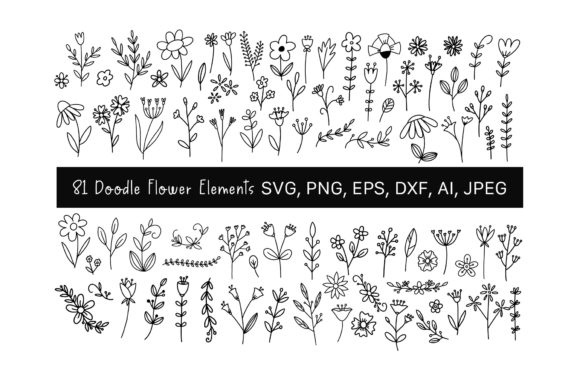
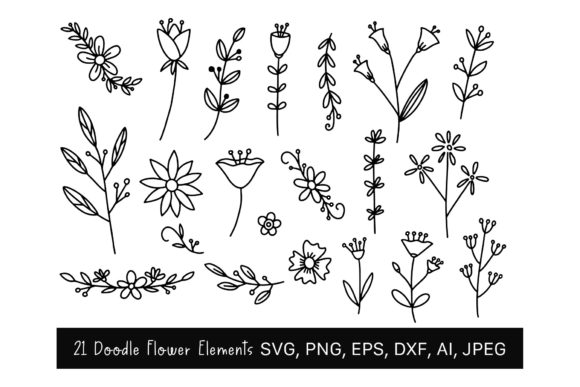
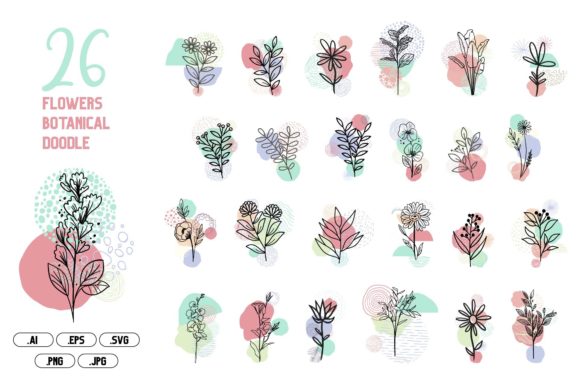
When you first open the Flowers Botanical Doodle files, the immediate takeaway is the playful yet structured nature of the illustration. It isn’t just a generic clip-art flower; there is a distinct line-weight variation that suggests hand-drawn intent. For a custom apparel decorator, this is crucial. Solid, uniform lines can look flat and cheap when embroidered, but the doodle style offers natural breaks and organic curves that mimic the texture of running stitch or delicate satin stitch outlines.
The mood is light, airy, and approachable. It screams "spring collection," "nursery decor," or "bridesmaid gifts." It lacks the aggressive boldness of streetwear graphics, making it perfect for soft goods like baby clothes, aprons, and tote bags. However, because it is a Graphics and Illustrations category item rather than a pre-digitized embroidery file, the visual personality relies entirely on how you choose to interpret it. If you treat it as a rigid vector, it might lose its charm. If you let the digitizer’s software breathe with slight fill variations, it becomes a sophisticated piece of art.
Real-World Application: From Screen to Stitch
Let’s talk about a real scenario. Imagine you are preparing a batch of personalized gift sets for a local boutique client. They want a linen tea towel and a matching canvas tote bag, both featuring a central botanical motif. You decide to use the Flowers Botanical Doodle SVG file as your base template. Because the source is a clean vector (AI/SVG), you can scale it perfectly to fit a standard 4x4 inch hoop or expand it for a larger 5x7 inch hoop without losing edge quality.
In this context, the design performs exceptionally well as an applique design. The clear outer boundaries of the doodle flowers allow for precise cutting of felt or cotton fabric. You could stitch a satin stitch border around the shapes, filling them with contrasting thread colors. This adds dimension that a flat print simply cannot achieve. For the tote bag, using the transparent PNG to preview placement on the fabric grain helps ensure the design doesn’t clash with the weave. The result is a finished product that looks custom-made, not mass-produced.
Similarly, for sweatshirt embroidery or hoodies, this design works best when simplified. A full-color fill of every petal might be too dense. Instead, using the design as a guide for a single-color outline with strategic fill stitch accents on the largest blooms creates a balanced look. It respects the fabric texture rather than overwhelming it. This is particularly important for small shop products where perceived value is tied to attention to detail.
Where to Use It Carefully
No design is universal, and Flowers Botanical Doodle has specific constraints that designers must respect to avoid costly mistakes. First, consider the stitch density. Because the original artwork is a line-based doodle, attempting to fill every negative space with thread will result in a stiff, unyielding fabric. Avoid using this design for large solid blocks of color on stretchy fabrics like jersey knits unless you are using a strong cut-away stabilizer. The tension required to keep such a dense design flat may pucker the material.
Second, think about scale. While the digital canvas is high-resolution, physical embroidery has limits. Do not attempt to replicate the tiniest doodle details on a small hoop size, such as a 2.5-inch circle. Those fine lines will either disappear or merge into a muddy blob. This design is better suited for medium-to-large placements on items like pillow covers, kitchen towels, or the front panel of a cap. On curved surfaces like caps, the organic flow of the doodle actually helps hide minor alignment shifts, which is a hidden benefit of this particular aesthetic.
Also, be mindful of dark fabrics. The "doodle" style often relies on white or light-space to define shapes. On black denim or navy blue canvas, you will need to use a substantial underlay or a contrasting thread color for the outlines to ensure the design pops. Without proper contrast, the embroidery project may look faint and unfinished.
Impact on Brand and Customer Trust
For commercial embroidery businesses, the choice of design directly impacts customer trust. A sloppy digitization job signals amateurism. However, a well-executed interpretation of Flowers Botanical Doodle signals care. When a customer receives a personalized gift with clean stitches, proper stabilization, and no loose threads, they are more likely to leave a positive review and return for future purchases. The versatility of the provided formats allows you to create cohesive branding across multiple touchpoints—using the EPS file for packaging inserts and the SVG for the actual garment decoration.
Furthermore, using a unique, illustrative asset like this helps differentiate your craft business from competitors who use generic, overused clip art. It gives your handmade product a signature look. Whether you are selling at a craft fair or listing on Etsy, the visual appeal of a botanical doodle rendered in high-quality thread creates an emotional connection with the buyer. It feels personal, artistic, and thoughtful.
Practical Designer Notes for Success
To ensure your embroidery project goes smoothly, follow these practical steps before committing to production:
- Test on Scrap Fabric: Always run a test stitch on the exact fabric you plan to use. Different weaves react differently to thread tension.
- Check Thread Color Contrast: Lay your chosen threads against the fabric to ensure the design elements are visible. Light gray thread on white fabric will vanish.
- Review Stitch Density: If digitizing yourself, reduce the stitch count in dense areas. Less is often more in embroidery.
- Confirm Hoop Size: Ensure your final design dimensions fit comfortably within your machine’s hoop capabilities, leaving room for edge stitching if necessary.
- Inspect Small Details: Zoom in on the digital file. Are any lines thinner than what your machine can reliably stitch? Simplify if needed.
- Use Proper Stabilizer: Heavy fabrics need heavy stabilizers; light fabrics need tear-away or wash-away options to prevent bubbling.
- Verify Licensing: Before selling finished items, double-check the license terms associated with the digital embroidery file or graphic assets to ensure commercial use is permitted.
In conclusion, Flowers Botanical Doodle is a strong candidate for designers looking to add a touch of whimsical elegance to their portfolio. It bridges the gap between digital illustration and tactile craft beautifully, provided you respect the technical limitations of embroidery. By treating it as a creative foundation rather than a rigid template, you can create custom apparel and home decor items that truly stand out.